
Google's mobile-first indexing means the mobile version of your website is now the primary version used for indexing and ranking. This fundamental shift recognizes that most users now access Google via mobile devices, making mobile optimization no longer optional but essential for SEO success.
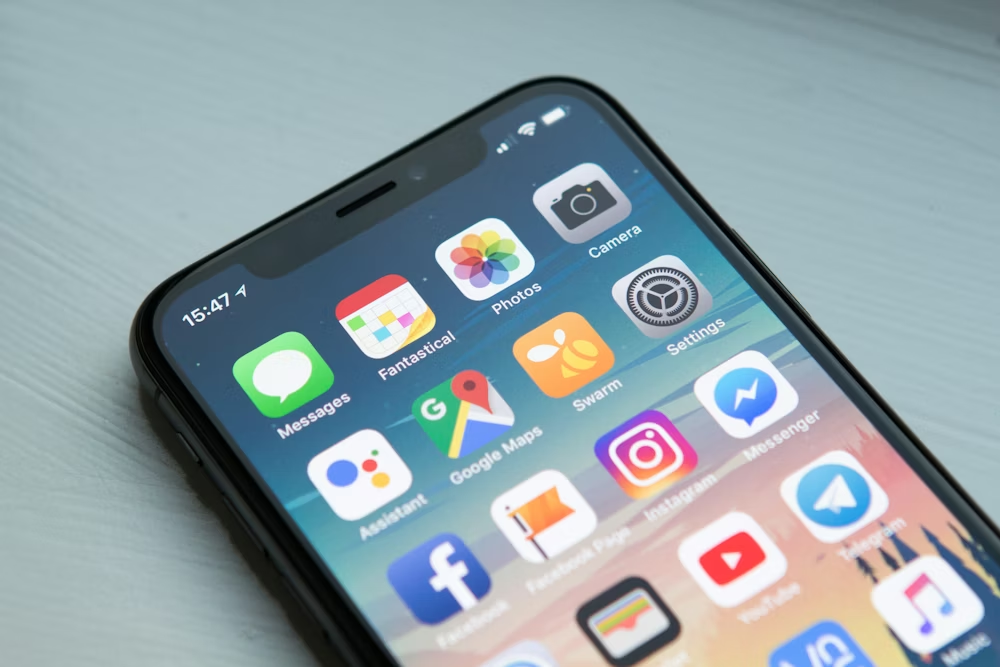
Understanding Mobile-First Indexing
Mobile-first indexing means Google predominantly uses the mobile version of your content for indexing and ranking. Here's what this actually means for your website:
- Primary Crawling: Googlebot primarily crawls and indexes the mobile version of your site
- Ranking Signals: Mobile page experience signals heavily influence your search rankings
- Content Parity: Your mobile site must contain the same primary content as your desktop site
- Structured Data: Schema markup must be present on both mobile and desktop versions
- Metadata Consistency: Titles, descriptions, and other metadata should be identical across versions
Mobile Optimization Best Practices
Ensure your website is fully optimized for mobile users with these essential strategies:
- Responsive Web Design: Implement a mobile-responsive theme that adapts seamlessly to all screen sizes
- Mobile Page Speed: Optimize for fast mobile loading times with compressed images and minimal code
- Touch-Friendly Interface: Ensure buttons, links, and form fields are easily tappable with adequate spacing
- Readable Text: Use font sizes and line spacing that are legible on small screens without zooming
- Optimized Images: Serve properly sized images for different screen resolutions and devices
- Simplified Navigation: Create intuitive mobile navigation with hamburger menus or bottom navigation bars
Core Web Vitals for Mobile
Google's Core Web Vitals are particularly important for mobile-first indexing. Focus on optimizing these key metrics:
- Largest Contentful Paint (LCP): Measure loading performance - aim for 2.5 seconds or faster on mobile
- First Input Delay (FID): Assess interactivity - target less than 100 milliseconds for mobile users
- Cumulative Layout Shift (CLS): Evaluate visual stability - maintain score under 0.1 to prevent content jumping
- First Contentful Paint (FCP): Track when the first content appears - optimize for quick initial rendering
- Time to Interactive (TTI): Measure when the page becomes fully interactive - minimize JavaScript execution time
Mobile-Specific SEO Considerations
Beyond technical optimization, consider these mobile-specific SEO factors:
- Local Optimization: Mobile searches often have local intent - optimize for "near me" and location-based queries
- Voice Search Readiness: Mobile users frequently use voice search - optimize for conversational queries
- App Integration: If you have a mobile app, implement proper app indexing and deep linking
- Mobile Sitemaps: Ensure your XML sitemap includes all mobile-accessible URLs
- Accelerated Mobile Pages (AMP): Consider implementing AMP for content-heavy pages where speed is critical
Testing Your Mobile Experience
Regularly test and monitor your mobile performance using these essential tools:
- Google's Mobile-Friendly Test: Check basic mobile compatibility and identify critical issues
- PageSpeed Insights: Analyze mobile performance and get specific optimization recommendations
- Search Console Mobile Usability: Monitor mobile usability errors and warnings in Google Search Console
- Real Device Testing: Test on actual mobile devices to experience the true user journey
- Core Web Vitals Report: Track field data and identify pages needing mobile performance improvements
Mobile-first indexing is here to stay, and its importance will only continue to grow. By prioritizing mobile optimization now, you're not just adapting to Google's requirements—you're providing a better experience for the majority of your users while future-proofing your website against evolving search algorithms. Remember that mobile optimization is an ongoing process that requires regular monitoring and continuous improvement.